Creative Ways to Use QR Codes
QR codes are everywhere, but most are wasted. These real-world examples show how QR codes are quietly used to add context, remove friction, and make physical things smarter.

QR Codes Are No Longer a Gimmick
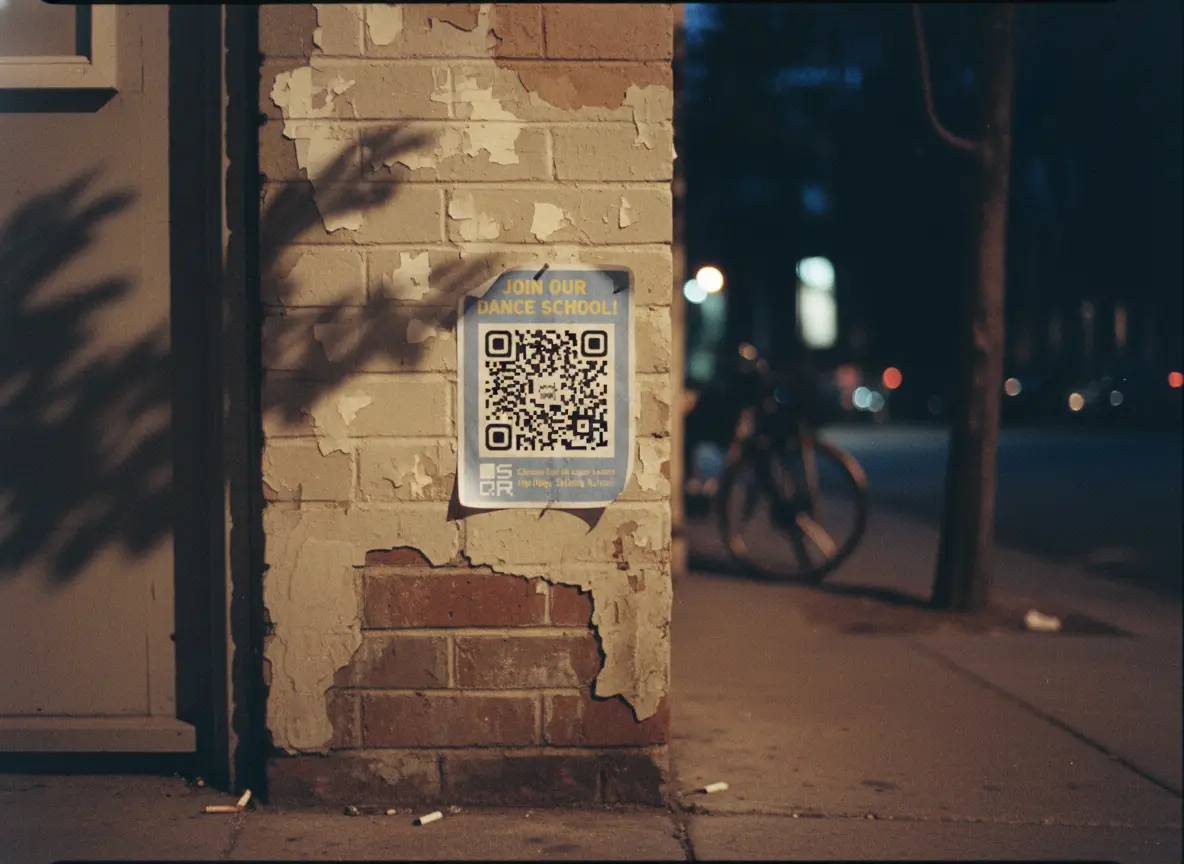
Not long ago, QR codes felt like a trick. You saw them on posters or flyers, tried them once, and forgot about them. They were awkward. Phones struggled. People didn’t trust where the scan would lead.
That’s over.
Today, scanning a QR code is automatic. You don’t think about the technology anymore. You just want the result. A menu. A page. A ticket. More information. Less friction.
That shift is important.
QR codes didn’t become powerful because they got prettier or more complex. They became powerful because phones got better, habits changed, and expectations dropped. People now assume a QR code will work. They expect it to be useful. If it isn’t, they move on without a second thought.
This means the value of a QR code no longer lives in the square itself. It lives in what happens after the scan.
A good QR code feels invisible. It removes a step. It answers a question without asking for effort. It connects something physical to something digital in a way that feels obvious once you’ve seen it.
A bad QR code does the opposite. It asks for a scan and gives nothing back. It leads to a homepage, a dead link, or information that should have been on the sign already. People remember that too. Just quietly.
That’s why creative QR code use isn’t about doing more. It’s about doing less, better.
In the real world, QR codes work best where space is limited, time matters, or information changes. They show up on packaging that can’t explain everything. On signs that need updates. In moments where typing a URL would be annoying or unrealistic.
They also work when they respect context. A QR code in a museum behaves differently than one on a coffee cup. A QR code at an event has a different job than one on a real estate sign. Same tool. Different intent.
This article isn’t a checklist or a gimmick roundup. It’s a grounded look at how QR codes are actually used today. Not in theory. Not in marketing slides. But in daily situations where they quietly make things easier.
You’ll see patterns repeat. Physical spaces that need more depth. Products that need context. Moments that only happen once. Systems that need to change after printing.
Once you notice those patterns, QR codes stop feeling random. They start feeling obvious.
And that’s when they work best.
Physical Spaces That Need More Information
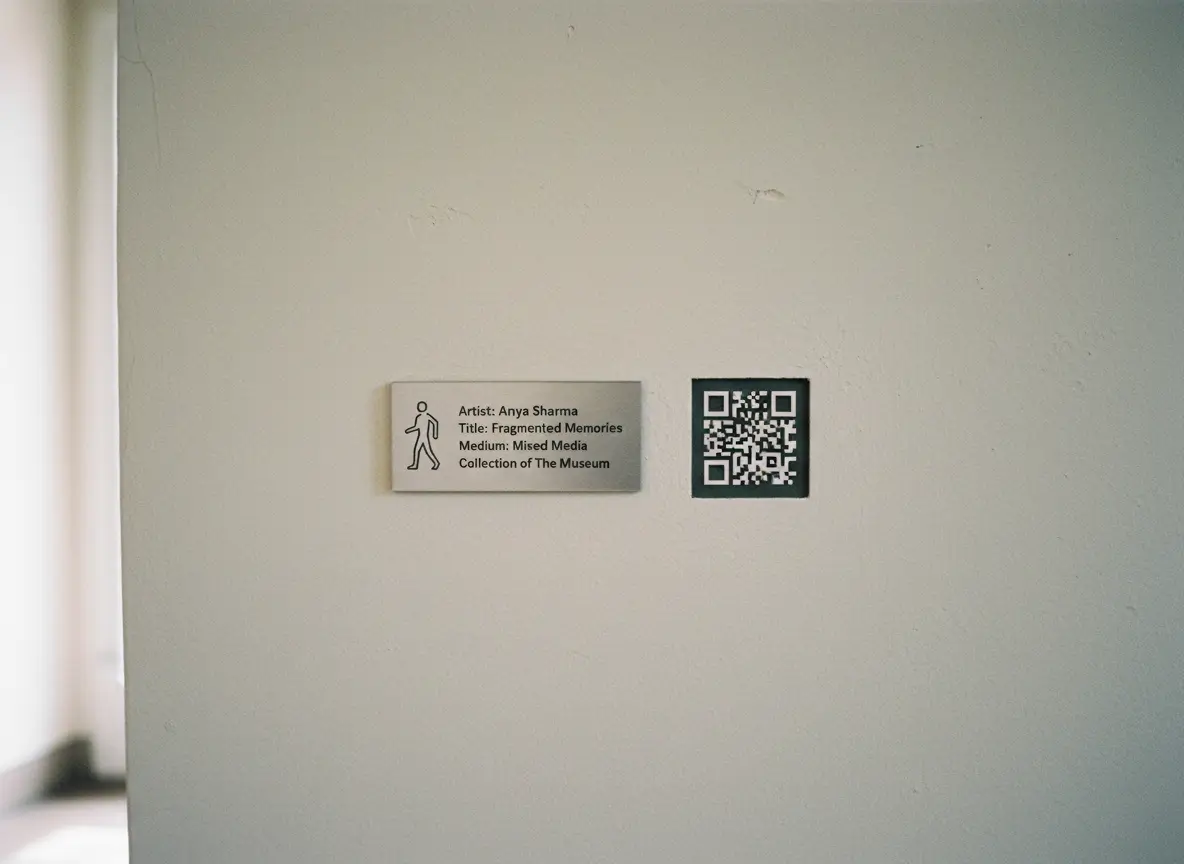
Physical spaces are full of limits. Walls don’t expand. Signs can’t scroll. Plaques have room for a title and a few careful sentences, and that’s it.
That’s where QR codes fit naturally.
In places like museums, trails, gyms, stores, and public buildings, the problem is rarely a lack of information. It’s where to put it. Too much text overwhelms people. Too little leaves them guessing. Updating anything usually means reprinting, replacing, or just letting it go out of date.
A QR code solves this quietly.
The physical space stays clean and readable. One label. One sign. One small square. The detail lives somewhere else. Behind the scan, information can grow, change, or adapt without touching the wall again.
Museums are an obvious example. A small placard can introduce a piece. A QR code can carry the rest. Background, process, audio, video, translations, or even a child-friendly version. Visitors choose how deep they want to go instead of being forced to read everything at once.
Walking and hiking trails work the same way. A sign might show the route and distance. A QR code can handle weather updates, safety notes, seasonal closures, or wildlife information. Nothing clutters the trail. Nothing goes out of date.
Gyms and fitness spaces use QR codes for a different reason: confidence. Instructions printed on machines are often minimal or confusing. A QR code can link to short videos showing proper form, warm-ups, or alternatives. No awkward questions. No guessing. Just help when it’s needed.
Retail and public spaces benefit from the same pattern. Store windows after hours. Product displays with limited shelf space. City signs that can’t explain history in three lines. The QR code acts as an extension, not a distraction.
The key is that the space stays fixed, but the information doesn’t have to.
When QR codes work in physical environments, they don’t shout. They don’t explain themselves. They’re just there for people who want more. And because the content behind them can be updated, improved, or corrected over time, the space stays useful long after the sign was printed.
That’s the real upgrade. Not more signs. Just smarter ones.
Products, Packaging, and Objects You Touch

Most products can’t explain themselves. A label has limits. A tag runs out of space. And once something is printed, it usually stays that way.
That’s where QR codes earn their place on packaging and physical objects.
Used well, a QR code doesn’t compete with design. It supports it. The front of the package stays clean and focused. The extra context moves out of the way, waiting for the people who want it.
This is especially useful for instructions. Assembly steps, care details, or setup guides are rarely fun to read in tiny print. A QR code can link to a short page or video that shows exactly what to do. No guessing. No folded leaflets that get lost.
Sourcing and transparency work the same way. Food, coffee, wine, cosmetics, and clothing all benefit from being able to tell a longer story. Where it came from. How it was made. What materials were used. Instead of squeezing that into marketing copy, a QR code lets curious customers dig deeper without forcing everyone else to.
After-purchase follow-ups are another quiet win. A QR code inside the box can lead to registration, tips, refills, or support. It’s a natural moment. The product is already in someone’s hands. The scan feels helpful, not promotional.
Even simple objects benefit. Rental equipment. Tools. Electronics. Gym gear. A small QR code can link to safety notes, quick-start guides, or replacement parts. The object stays simple. The information stays flexible.
The key is intent.
QR codes on products work best when they answer a real question someone has after touching the item. How do I use this? How do I take care of it? Where did this come from? What’s next?
When the answer matters, the scan feels natural. When it doesn’t, the QR code feels like decoration.
Good packaging doesn’t shout. And neither should the QR code on it.
Events, Moments, and One-Time Experiences
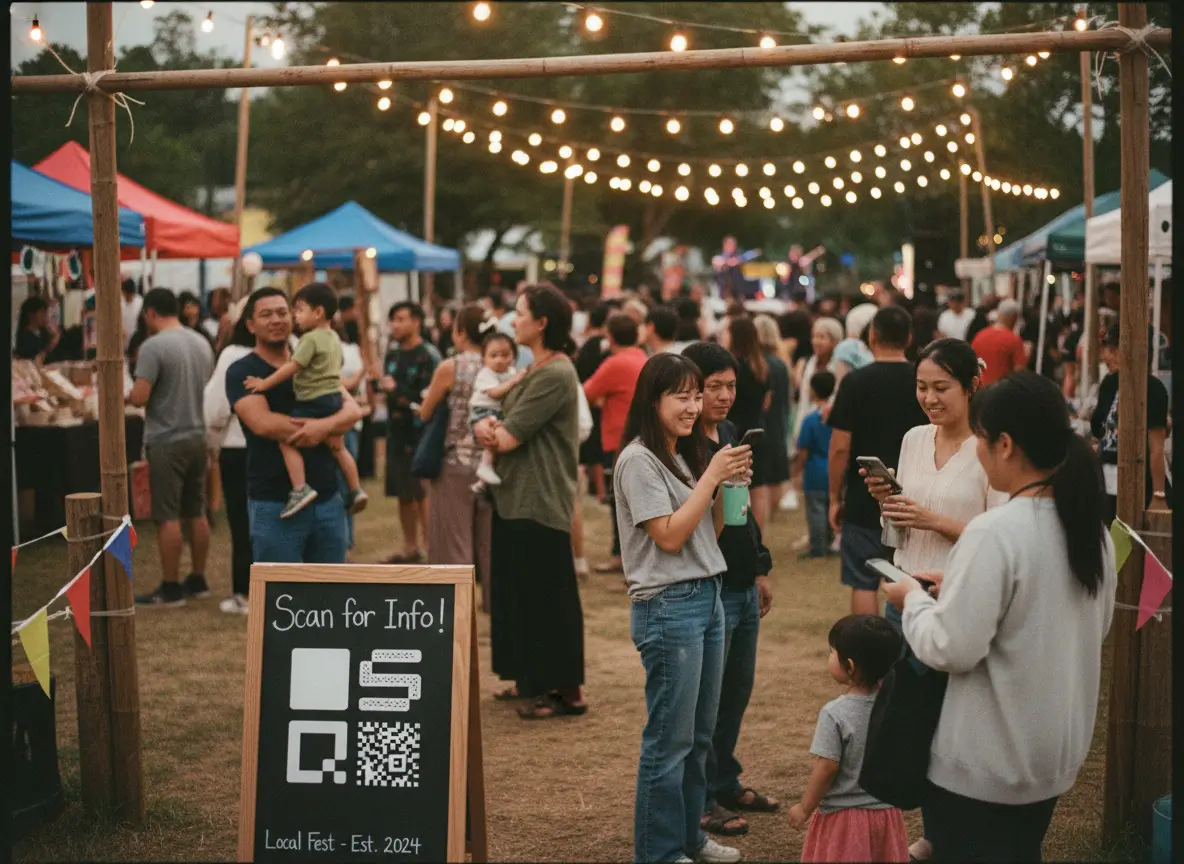
Some moments only happen once. When they’re gone, they’re gone. That’s why events are a perfect fit for QR codes.
At events, timing matters more than polish. People don’t want to search, type, or listen to instructions yelled over music. They want a fast way in. One scan. Done.
This shows up everywhere. Conferences use QR codes for schedules, room changes, speaker info, and feedback. When something shifts, the sign stays the same and the information updates behind it. No reprints. No confusion.
Weddings and private events use QR codes for RSVPs, directions, playlists, and photo sharing. Guests don’t need paper cards or long explanations. The scan becomes the hub. Simple, personal, and easy to revisit later.
Pop-ups and markets rely on them for payments, sign-ups, and follow-ups. A QR code on the counter replaces awkward conversations about links or handles. Scan if you’re interested. Walk away if you’re not. No pressure.
Concerts and festivals take it even further. A QR code on a screen can send people straight to a track, a merch page, or a mailing list while the moment is still fresh. No “link in bio.” No remembering later.
The pattern is always the same. Reduce friction when attention is limited.
QR codes work at events because they respect the moment. They don’t interrupt. They don’t ask for commitment. They just open a door at exactly the right time.
When the experience is temporary, the access needs to be instant.
Personal Identity, Access, and Shortcuts
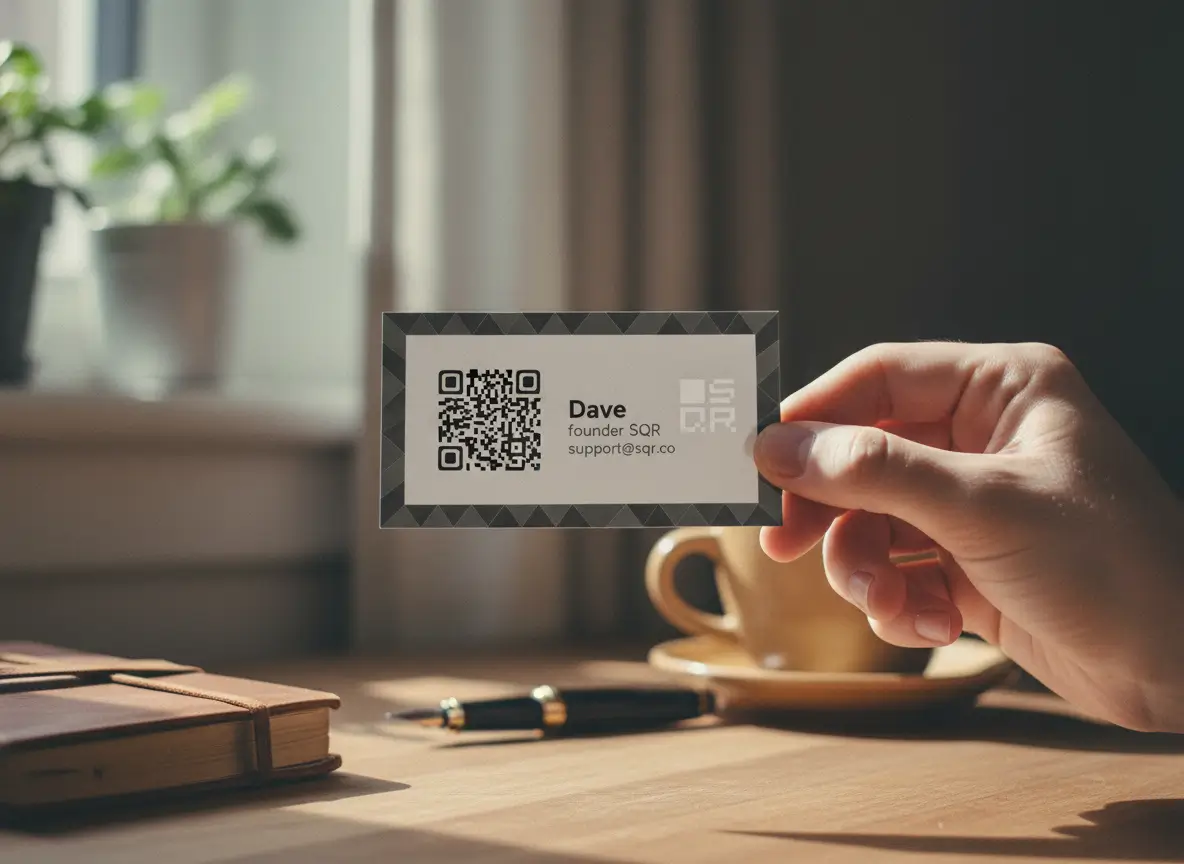
When QR codes work for individuals, it’s usually for one reason: speed.
Sharing who you are or how to reach you shouldn’t require explanations. No spelling out usernames. No awkward pauses while someone types a URL. One scan replaces all of that.
This is why QR codes show up on business cards, resumes, portfolios, and even phone lock screens. They act as shortcuts. Scan once and you’re where you need to be.
For professionals, this often means a single page that holds everything. Contact details, social profiles, work samples, booking links. Instead of handing someone a list of places to find you, the QR code becomes the handoff. Clean and complete.
Creators use them the same way. A QR code on a print, a sticker, or a table at an event can link straight to a portfolio, shop, or profile. There’s no pitch involved. Interest does the work.
Even in casual settings, QR codes lower friction. Sharing Wi-Fi access. Exchanging contact details. Sending someone to a document or playlist. The less time it takes, the more natural it feels.
The important part is restraint. Personal QR codes work best when they lead somewhere intentional. One destination. One clear purpose. The moment someone scans, they should understand why.
When that’s done right, the QR code disappears into the interaction. You scan. You move on. That’s the whole point.
Systems That Need to Change After Printing
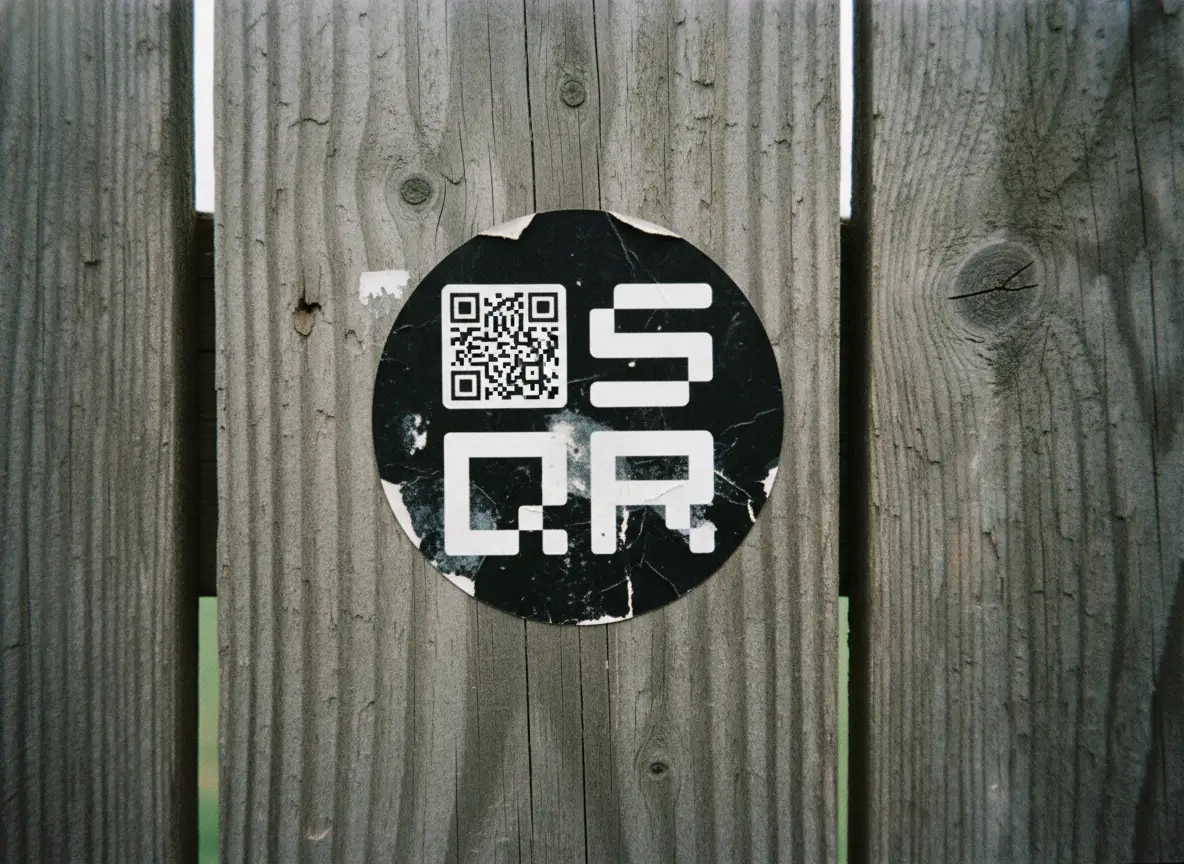
This is where QR codes stop being convenient and start being necessary.
Anything that gets printed and then lives in the real world for weeks, months, or years will eventually become outdated. Prices change. Links break. Instructions evolve. Campaigns end. Yet the sign, sticker, label, or poster stays exactly the same.
That gap between what’s printed and what’s current is where problems start.
Traditionally, the only fix was replacement. Reprint the sign. Reissue the flyer. Update the sticker. That costs time, money, and attention. So most things don’t get updated at all. They just quietly drift out of sync with reality.
QR codes change that dynamic.
A QR code lets the physical layer stay fixed while the digital layer keeps moving. The paper doesn’t need to know what changed. The system behind it does.
Real estate is a clear example. A sign in front of a house might stay there for weeks. During that time, the listing can change multiple times. Photos get updated. Prices adjust. Availability shifts. A QR code on the sign doesn’t care. It always leads to the current version. No new sign. No crossed-out text. No confusion.
Recycling systems work the same way. Instructions printed on bins are often outdated or unclear. Rules change by city. Materials get added or removed. A QR code can point to a page that always reflects the latest rules for that location. The bin stays the same. The information stays accurate.
Public campaigns depend on this even more. Posters for health, safety, or community programs are printed in bulk and placed everywhere. If guidance changes, those posters don’t disappear. A QR code gives them a second life. The message on the wall stays stable. The details behind it stay current.
The same logic applies to instructions and manuals. Printed guides are frozen in time. A QR code can link to updates, corrections, or expanded explanations without invalidating what’s already out there. Instead of throwing information away, you extend it.
Even advertising benefits from this approach. A billboard, flyer, or magazine ad might be planned months in advance. Once it’s live, it can’t react to performance or context. A QR code allows the destination to adapt. Different pages. Different messages. Different outcomes. The ad remains the entry point. The system behind it does the work.
The important thing here isn’t the technology. It’s the separation of roles.
The printed object becomes a stable trigger. The QR code becomes the bridge. The destination becomes the part that can evolve.
When people scan, they don’t care how that system works. They just expect it to be right. They expect the information to match the moment they’re in. QR codes make that expectation reasonable instead of risky.
This is why dynamic use matters, even if it’s never mentioned.
From the outside, it looks simple. Scan and arrive. Behind the scenes, it means fewer reprints, fewer mistakes, and fewer dead ends. It means systems that age better instead of breaking over time.
QR codes are most powerful when they protect you from the future. When you know something will change, but you don’t know how yet, they give you room to adapt.
Why Creative QR Use Is About Restraint
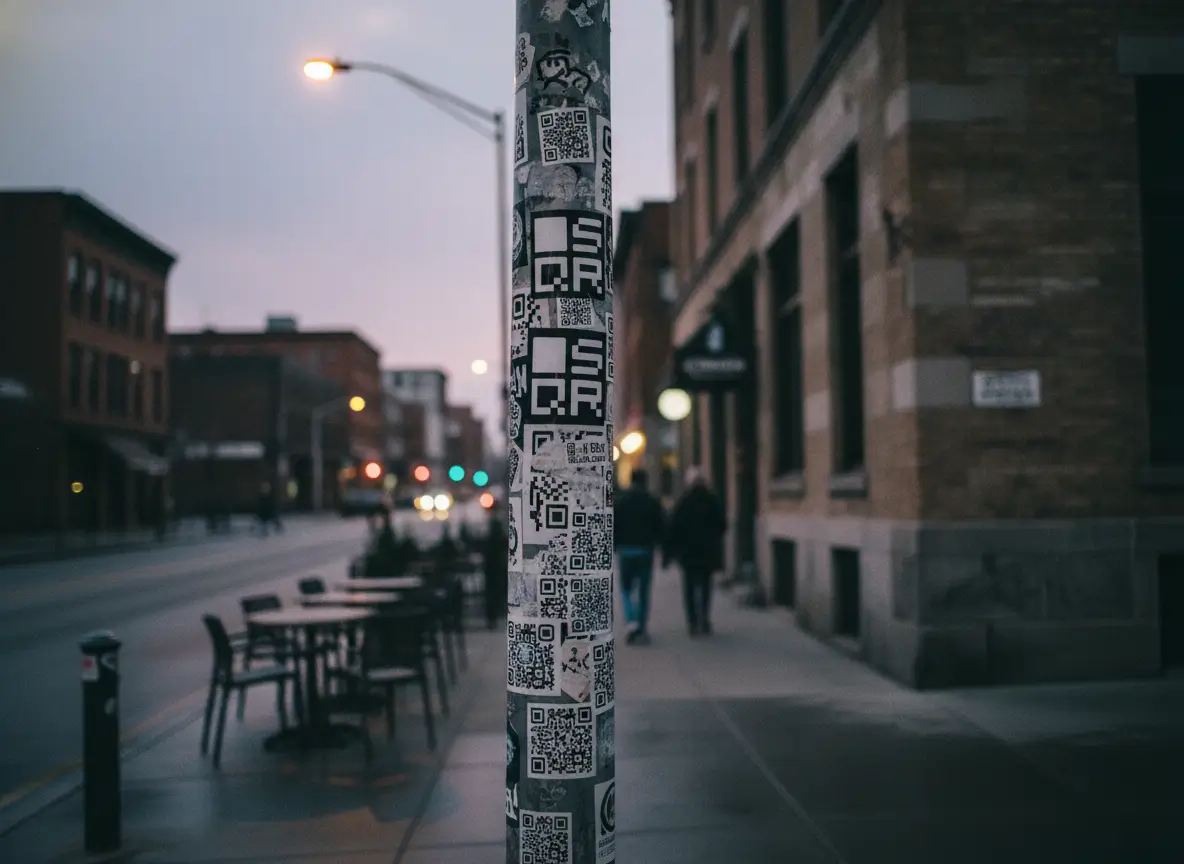
By now, a pattern should be clear. QR codes don’t work because they are clever. They work because they are useful at the exact moment someone needs them.
The best examples in this article all share the same quality: restraint.
QR codes are most effective when they solve a small, specific problem. They don’t try to impress. They don’t try to explain themselves. They simply remove a step that didn’t need to be there in the first place.
In physical spaces, they extend information without crowding walls or signs. On products, they add depth without touching the design. At events, they replace instructions and delays with instant access. For individuals, they shortcut introductions. In systems that change over time, they protect printed materials from becoming outdated.
None of that requires QR codes everywhere.
In fact, overuse is the fastest way to make them invisible in the wrong way. When every surface asks for a scan, people stop trusting the value behind it. A QR code should earn attention by being in the right place, not by being louder.
Good QR use respects context. A museum visitor expects optional depth. A shopper expects help after purchase. An event guest expects speed. When a QR code matches that expectation, scanning feels natural. When it doesn’t, it feels like friction disguised as convenience.
That’s why the destination matters more than the code. A well-designed experience behind the scan does the real work. The QR code is just the door. If what’s behind it is unclear, outdated, or unnecessary, the scan feels wasted.
The strongest QR codes almost disappear into the environment. They sit quietly on a sign, a package, or a card, waiting. They don’t demand action. They offer it.
This is also why QR codes age well when used properly. They don’t rely on novelty. They rely on behavior that has already settled in. People know how to scan. They know what to expect. The technology fades into the background.
Creative use doesn’t mean more ideas. It means better judgment.
Ask a simple question before placing a QR code anywhere: does this remove friction, or does it add another step? If the answer isn’t clear, it probably doesn’t belong there.
When QR codes are used with intention, they stop being a feature. They become infrastructure. Quiet, dependable, and easy to ignore until you need them.
And that’s exactly when they work best.
FAQs About Creative QR Codes
What makes a QR code actually useful?
It solves a real problem in the moment. Less typing. Less guessing. Faster access. If scanning feels easier than the alternative, the QR code earns its place.
Do people still scan QR codes regularly?
Yes. Scanning is now a habit, not a novelty. Phones handle it natively, and people expect QR codes to work without effort.
Should every QR code link to a website?
No. The destination should match the context. Sometimes it’s a page, sometimes a video, a menu, a form, a file, or a simple action. A website is just one option.
Where do QR codes fail most often?
When they lead to something generic, outdated, or irrelevant. A QR code that opens a homepage or gives no clear value feels wasted.
Is it better to use one QR code or many?
Usually fewer is better. One clear purpose beats multiple confusing options. If people have to choose, most won’t scan at all.
Can QR codes work without instructions?
Yes, and they often work better that way. A QR code placed in the right context explains itself without words.
What’s the biggest mistake businesses make with QR codes?
Using them because they can, not because they should. If a QR code doesn’t remove friction, it adds it.